Trading my Taiwan commute and social hours for quiet reading time
Jason · 2026 / 09 / 26 · 3 min read
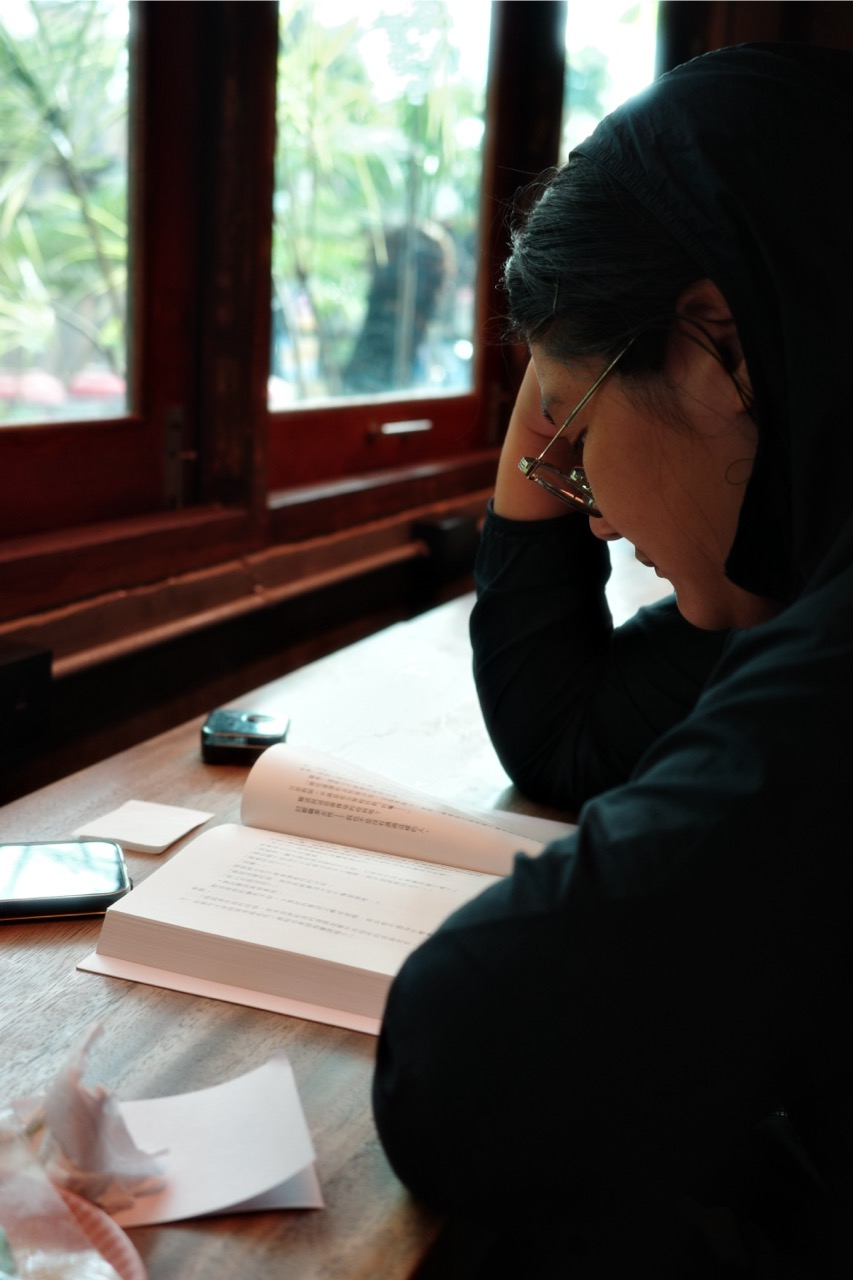
What I’ve been reading
I get through roughly one book a week. So far I have finished Taiwan Travelogue, 厭世的人請來泰國 (roughly, “Weary of the World? Come to Thailand”), The Mountain Is You, Die with Zero, Why Fish Don’t Exist, and 麻瓜通靈日記 (roughly, “A Muggle’s Psychic Diary”).
Compared with the time I used to spend on my phone, it is time much better spent.
Why reading
Fed a steady stream of personalized sensory stimulation, we slowly slide into a “use it or lose it” state. We stop thinking for ourselves: whatever we are handed, we respond with the emotions it was designed to draw out. In a way, we become livestock raised on a farm.1
Reading, by contrast, takes a bit of effort. It is training that brings your focus back. Your mind will wander, and that is normal; every time you pull it back, your focus levels up.
When you are fully absorbed, a kind of conversation starts between you and the text, like two Zen masters trading lines until a classic kōan is left behind. The more you think, the more you grow inside.2
When you don’t know what to read
Sometimes you just don’t know what to read next.
The books above are all very different in style. The one that took me longest was The Mountain Is You, because much of it keeps circling the same idea, and at one point I almost gave up. It is a bit like spicy food: you can’t wolf it down all at once. So I went with small, frequent servings, one chapter or section a day.
Taiwan Travelogue, 厭世的人請來泰國, 麻瓜通靈日記, and Why Fish Don’t Exist were all gripping. Every chapter ends on a hook that makes you open the next one, so how fast you get through them is entirely up to you.
Back to the question: how do you choose a book?
A title alone rarely tells you whether a book is right for you. If your instinct is to pick from a top-10 list, the worst you will get is something safe, since those lists reflect mainstream taste.
Another option: the classics
Here is another option, though: the classics. Siddhartha, Nineteen Eighty-Four, Brave New World, Man’s Search for Meaning, Animal Farm, Lord of the Flies, Kafka’s The Metamorphosis, and so on.
These books became classics for a reason. Many modern books grew out of them, the way branches and leaves grow from roots. And a good book lets you “see” things in daily life you could not see before. After Nineteen Eighty-Four, for example, you start noticing how language gets manipulated.
That’s probably a bit much for a first post. Let’s all go read.
- “Use it or lose it” goes back to the 19th-century naturalist Lamarck: organs that are used grow stronger, and those that are not gradually waste away. ↩
- A kōan is a recorded exchange between a Zen master and a student. It often has no set answer; the one contemplating it has to keep turning it over. ↩
Select any sentence in the piece to share it as an image.